In summer, our living spaces seem to ask for more air: heavy throws are put away, thick curtains give way to lighter ones, and ceramics appear on the table instead of heavy glassware with winter patterns. We want to feel a breath of nature in every room. Flowers are perfect for creating that feeling. Sometimes, all it takes is a few stems of daisies, picked up almost by chance on the way home, to make a room feel cooler and calmer.
But how can you bring fresh flowers into a summer interior in a thoughtful, intentional way and help the bouquet last longer than a single day in the heat?
Why does our choice of flowers change in summer?
In winter, a bouquet usually takes on the role of the main accent – contrasting and often brightly coloured – to compete with the grey light outside the window. Summer is different: an overly elaborate arrangement is more likely to get lost in an interior than stand out. If a bouquet immediately catches your eye in winter, in summer you may not even notice it for several minutes, so naturally does it blend into the space.
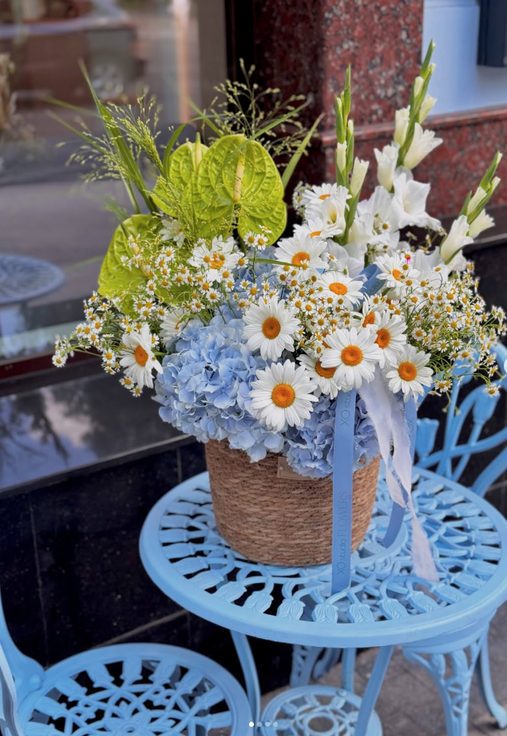
Flowers with a lighter, airier structure are the favourites – they seem to complete the interior: scabiosa, nigella, daisies and delicate sprays of grasses. There is an almost weightless sense of air moving between their blooms, and an arrangement made from them never looks dense or heavy, even when it contains plenty of stems.
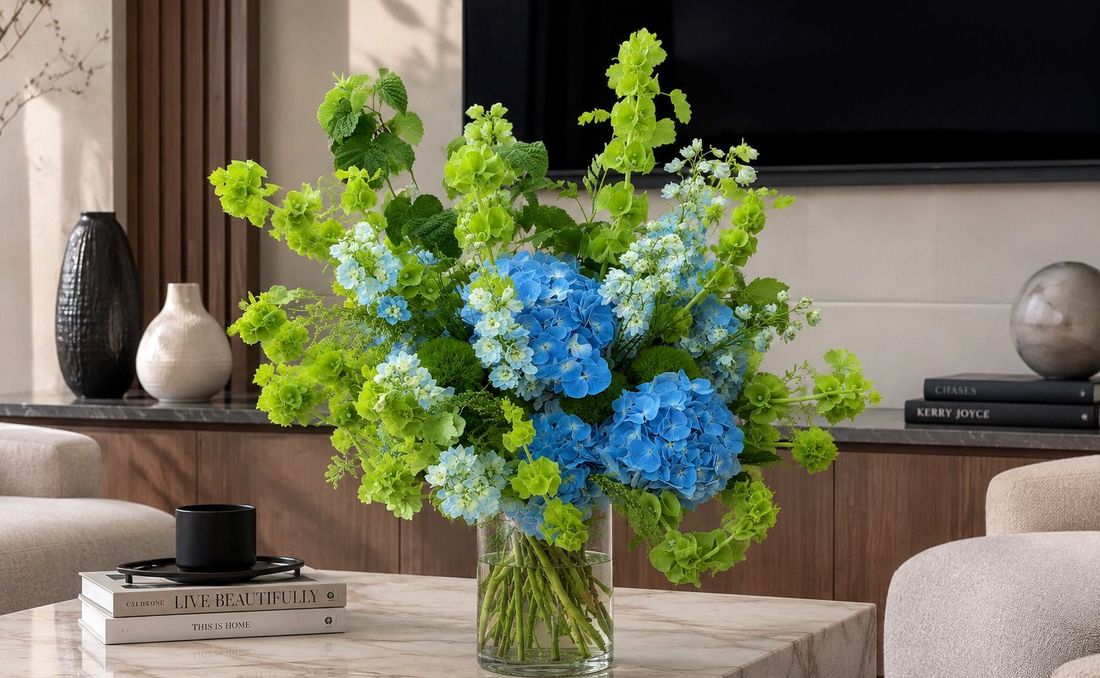
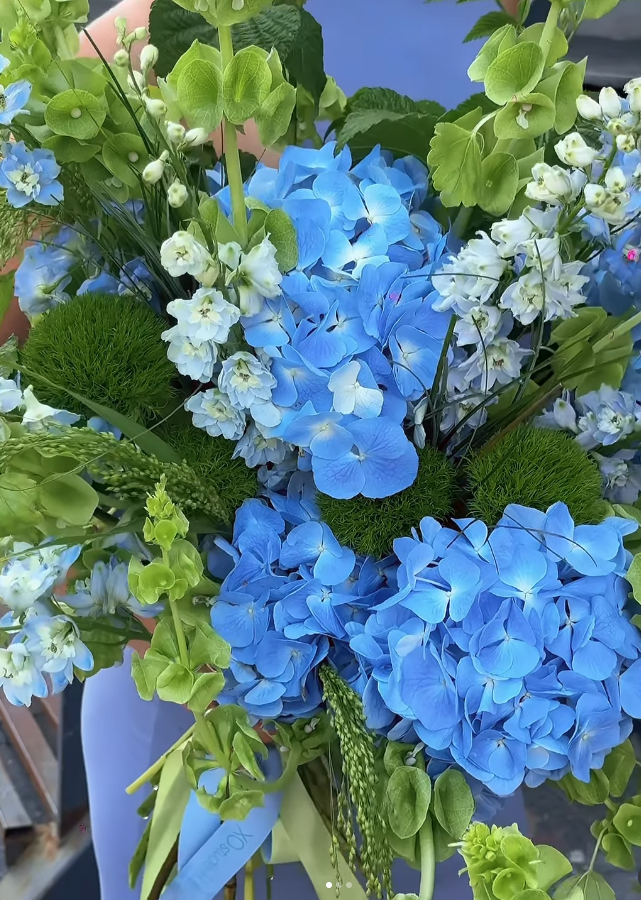
Another distinctly summery category is tall, architectural flowers with a strong, clean line: delphinium and eremurus. Sometimes, even a single straight gladiolus can transform a room more dramatically than rearranging the furniture.
Colour and texture: not brighter, but in harmony
The biggest mistake in summer decorating is reaching for every bright shade at once. In practice, a dense mix of ten fully open blooms can often look chaotic, especially against the light walls and minimalist furniture so characteristic of the summer season.
A more effective approach is to choose flowers that complement the materials already dominant in the home:
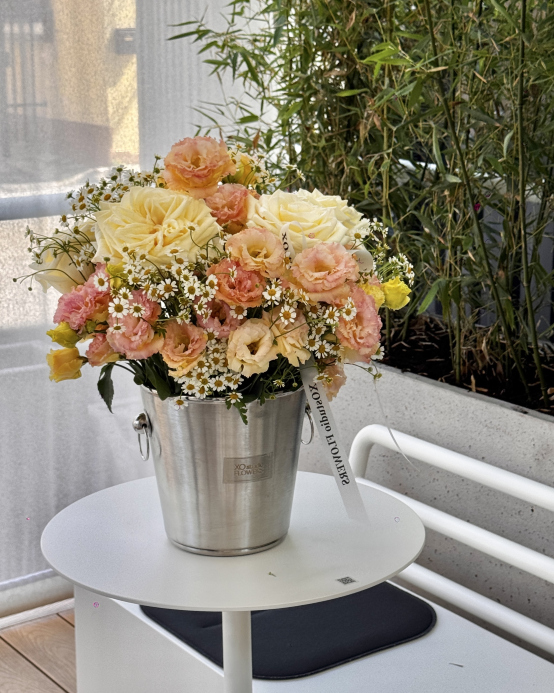
✦ Linen, cotton, unfinished wood: these pair beautifully with dusty, muted shades – powder pink, cream and wheat tones. Eustoma, daisies and statice work particularly well here.
✦ Dark wood, black metal, concrete: against this backdrop, deep but not overly loud shades create a striking contrast — burgundy, dark violet and terracotta.
✦ Light ceramics, stone: a neutral base that allows for a single vivid focal point — one stem of snapdragon or a few stems of nigella.
Texture matters just as much: the ruffled, almost fluffed-up petals of a gladiolus paired with a rounded scabiosa bloom create a contrast of textures that is far more interesting than a simple mix of differently coloured flowers.
Where to Place Your Bouquets
Not every spot in the home is equally well suited to a summer bouquet. It is not just about aesthetics – certain locations also provide conditions in which flowers simply last longer.
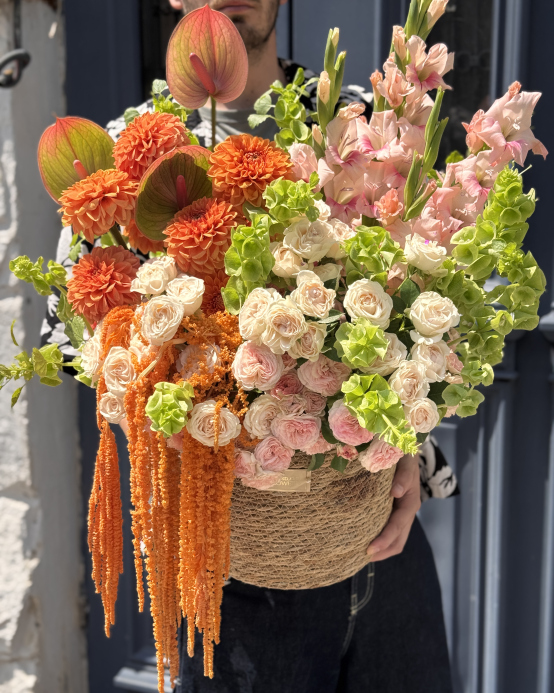
✦ Living room and dining area. This is where a striking, statement-making Author's bouquet, delivered through a flower subscription service, feels perfectly at home.
✦ Entrance hall. The entryway is ideal for a vertical mono-bouquet made up of a few stems and displayed in a tall, narrow floor vase. It is the first thing you see when you walk through the door, so this is the place to embrace height.
✦ Kitchen. Because of its proximity to the stove and frequent temperature fluctuations, flowers tend to wilt faster here than anywhere else. It is better to choose low-maintenance varieties such as daisies, nigella or statice, which retain their appearance even when dried.
✦ Bedroom. This is a space where restraint works best: one or two stems, a muted colour palette and nothing with an overpowering scent. Many people, for example, consciously avoid lilies in the bedroom because of their intense fragrance at night.
Caring for Flowers in the Heat: What Really Helps Them Last
Summer interior floristry comes with one additional factor to consider: heat. Here are a few practical things that genuinely make a difference:
- Change the water more frequently. Bacteria multiply faster in warm conditions, causing the water to become cloudy. Instead of changing it every three to four days, it is better to refresh it every other day.
- Trim the stems at an angle, ideally under water. This helps prevent an air bubble from sealing the cut and blocking water absorption, allowing the flower to continue taking up water.
- Keep the vase away from direct sunlight and air-conditioning drafts. Both can cause subtle but significant damage: direct sunlight heats up the water, while the cold, dry airflow from an air conditioner can dehydrate delicate petals.
- Keep unopened buds away from ventilation grilles. Fluctuations in temperature can cause buds to open too quickly and unevenly.
With these simple guidelines, even a modest mono-bouquet in the right vase will last noticeably longer in your interior.
At XOstudio FLOWERS, summer is not only about creating designer bouquets – it is also the season for seasonal bunches, generous bundles of flowers that anyone can turn into their own arrangement at home. Because the most vibrant form of interior floristry is born when flowers become part of everyday life.
Leave the composition to the professionals – the florists at XOstudio FLOWERS will help you choose flowers that are right for your home, taking into account its natural light, colour palette and overall mood.